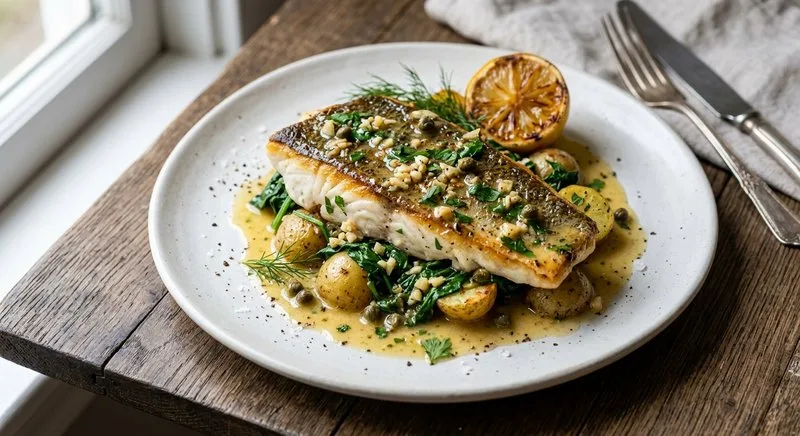
Gluten-Free Sea Bass with Lemon Butter
By the Gluten Free Recipes team ·
Delicate sea bass fillets are pan-seared to flaky perfection and bathed in a vibrant, zesty lemon butter sauce. This elegant dish offers a bright, citrusy flavor profile with a rich, velvety finish, making it a sophisticated yet simple gluten-free meal.
At a glance: This hard dinner recipe yields 4 servings in about 1h 10m (10 min prep, 60 min cook). It uses 10 ingredients — including sea bass fillets, olive oil, garlic — and walks through 5 steps. Updated . Browse more dinner recipes or return to all gluten-free recipes.
Cross-Contamination Warning for Gluten-Free Sea Bass with Lemon Butter: When preparing this dinner recipe, exercise caution with all packaged ingredients, especially stocks, tamari, and any pre-seasoned items, ensuring they are certified gluten-free. Cross-contamination can occur during processing, so always check labels In a shared kitchen, avoid porous materials — wooden spoons, wooden cutting boards, and scratched non-stick pans can harbor gluten proteins even after washing. Prefer glass, metal, or silicone tools. Stock often contains yeast extract or barley derivatives; use only certified gluten-free stock.
Gluten-Free Notes for Gluten-Free Sea Bass with Lemon Butter: This recipe is naturally gluten-free, relying on certified gluten-free stocks and tamari. It avoids all gluten-containing grains and their derivatives.
Ingredients
- 1.5 lbs sea bass fillets
- 2 tbsp olive oil
- 3 cloves garlic, minced
- 1 cup GF chicken or vegetable stock
- 2 tbsp GF tamari or coconut aminos
- 1 tbsp cornstarch or arrowroot starch
- 1 tsp salt
- 0.5 tsp black pepper
- 4 tbsp unsalted butter (dairy-free alternative if needed)
- 1 lemon juiced and zested
Instructions
- 1
Pat the sea bass fillets completely dry with paper towels, then season generously on both sides with salt and black pepper. This ensures a beautiful sear and enhances the fish's natural flavor. Let the seasoned fish rest at room temperature for about 10 minutes while you prepare the other components.
- 2
Heat the olive oil in a large, heavy-bottomed skillet over medium-high heat until it shimmers. Carefully place the seasoned sea bass fillets into the hot oil, ensuring not to overcrowd the pan; cook in batches if necessary. Sear the fish for approximately 4-5 minutes per side, or until it develops a golden-brown crust and is cooked through, flaking easily with a fork.
- 3
Once the sea bass is cooked, remove the fillets from the skillet and set them aside on a plate, tented loosely with foil to keep warm. Reduce the heat to medium, and add the minced garlic to the same skillet. Sauté the garlic for about 30-60 seconds until fragrant, being careful not to burn it, as this can turn the flavor bitter.
- 4
Pour the GF chicken or vegetable stock and GF tamari (or coconut aminos) into the skillet with the garlic. In a small bowl, whisk together the cornstarch (or arrowroot starch) with 2 tablespoons of cold water until smooth, creating a slurry. Gradually whisk this slurry into the simmering liquid in the skillet. Continue to cook, stirring constantly, for about 3-5 minutes, or until the sauce thickens to a glossy, coating consistency.
- 5
Stir in the unsalted butter (or dairy-free alternative) and the lemon juice and zest into the thickened sauce. Whisk until the butter is fully melted and incorporated, creating a rich, emulsified sauce. Taste the sauce and adjust seasoning with additional salt and pepper if needed. Return the seared sea bass fillets to the skillet, spooning the lemon butter sauce over them to coat. Allow the fish to gently warm through in the sauce for about 1-2 minutes before serving.
Nutrition (per serving)
Tips & Notes
- Brown the butter before adding it for a nutty, caramel depth that elevates simple recipes.
- Use a good-quality extra-virgin olive oil here — the flavor comes through in simple recipes.
- Press or mince garlic rather than slicing for a more pungent flavor; slice for a milder taste.
Learn More
Celiac-safe recipe development and testing since 2026
Our team develops and tests every recipe to be 100% gluten-free, verifying ingredients, techniques, and cross-contamination risks. We focus on making gluten-free cooking as delicious and accessible as possible. Learn more about us.