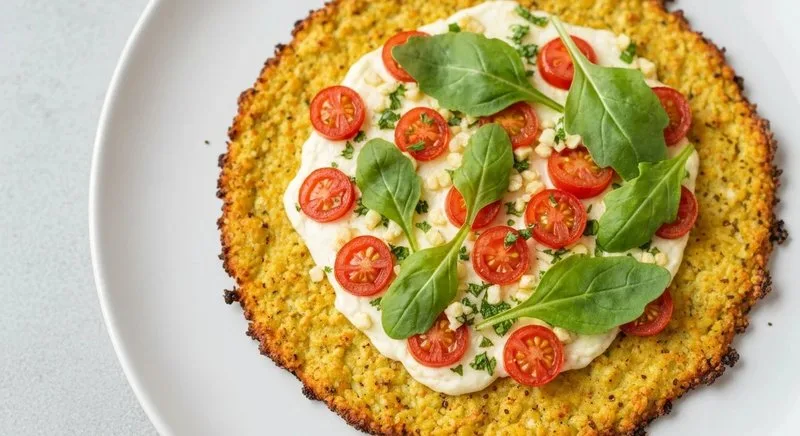
Gluten-Free Cauliflower Pizza Crust
By the Gluten Free Recipes team ·
Achieve a perfectly crisp and tender base for your favorite toppings with this adaptable gluten-free pizza crust. Its light texture and subtle flavor make it an ideal foundation for any pizza creation.
At a glance: This easy baking recipe yields 4 servings in about 40 minutes (15 min prep, 25 min cook). It uses 7 ingredients — including certified gluten-free all-purpose flour blend, xanthan gum, certified gluten-free baking powder — and walks through 5 steps. Updated . Browse more baking recipes or return to all gluten-free recipes.
Cross-Contamination Warning for Gluten-Free Cauliflower Pizza Crust: When preparing this baking recipe, to ensure this recipe remains safe for individuals with celiac disease, always use certified gluten-free ingredients and prepare it in a dedicated gluten-free kitchen environment to avoid cross-contamination with gluten In a shared kitchen, avoid porous materials — wooden spoons, wooden cutting boards, and scratched non-stick pans can harbor gluten proteins even after washing. Prefer glass, metal, or silicone tools.
Gluten-Free Notes for Gluten-Free Cauliflower Pizza Crust: This recipe relies on a carefully selected blend of gluten-free flours and starches to create a delicious pizza crust without any gluten-containing grains.
Ingredients
- 2 cups certified gluten-free all-purpose flour blend (e.g., rice flour, tapioca starch, potato starch)
- 1 tsp xanthan gum (omit if your GF flour blend already contains it)
- 1 tsp certified gluten-free baking powder
- 0.5 tsp salt
- 1 cup warm water (about 105-115°F)
- 2 large eggs
- 3 tbsp olive oil
Instructions
- 1
In a large mixing bowl, whisk together the certified gluten-free flour blend, xanthan gum (if using), certified gluten-free baking powder, and salt. Ensure all the dry ingredients are thoroughly combined for an even texture.
- 2
In a separate medium bowl, whisk together the warm water, large eggs, and olive oil until well incorporated. The water should be warm to the touch but not hot, which helps activate the leavening agent.
- 3
Pour the wet ingredients into the bowl with the dry ingredients. Mix with a spoon or spatula until a cohesive dough or thick batter forms, which will be stickier than traditional dough made with gluten-containing grains. Continue mixing for about 1-2 minutes until no dry streaks remain.
- 4
Lightly flour a clean surface with some of your gluten-free flour blend or place a sheet of parchment paper on your work surface. Transfer the sticky dough onto the floured surface or parchment. Using wet hands or a spatula, gently shape the dough into your desired pizza crust shape, about 1/4 to 1/2 inch thick. Let the shaped dough rest for about 10 minutes before baking.
- 5
Preheat your oven to 400°F (200°C). Carefully transfer the shaped crust (on parchment paper if used) to a baking sheet. Bake the crust for 18-20 minutes, or until it's lightly golden brown and feels firm to the touch. Allow the crust to cool completely on a wire rack before adding your favorite pizza toppings and baking again.
Nutrition (per serving)
Tips & Notes
- Too much xanthan gum makes baked goods rubbery — stick precisely to the recipe amount.
- Tapioca thickens sauces and gravies at a lower temperature than cornstarch; add it near the end of cooking.
- Baking powder loses potency after 6 months; test it by dropping a teaspoon into hot water — it should bubble vigorously.
Learn More
The Science of Gluten-Free Baking
Understand why gluten-free baked goods behave differently and how to fix common issues.
Gluten-Free Baking Troubleshooting Guide
Fix flat cakes, crumbly bread, and gummy textures with these expert tips.
Hidden Sources of Gluten You Never Knew Existed
Discover surprising foods and products that contain hidden gluten.
Celiac-safe recipe development and testing since 2026
Our team develops and tests every recipe to be 100% gluten-free, verifying ingredients, techniques, and cross-contamination risks. We focus on making gluten-free cooking as delicious and accessible as possible. Learn more about us.